


Two Chinese-American ninth-grade students in New York wrote a letter to President Trump, urging him to redefine school safety in the age of artificial intelligence

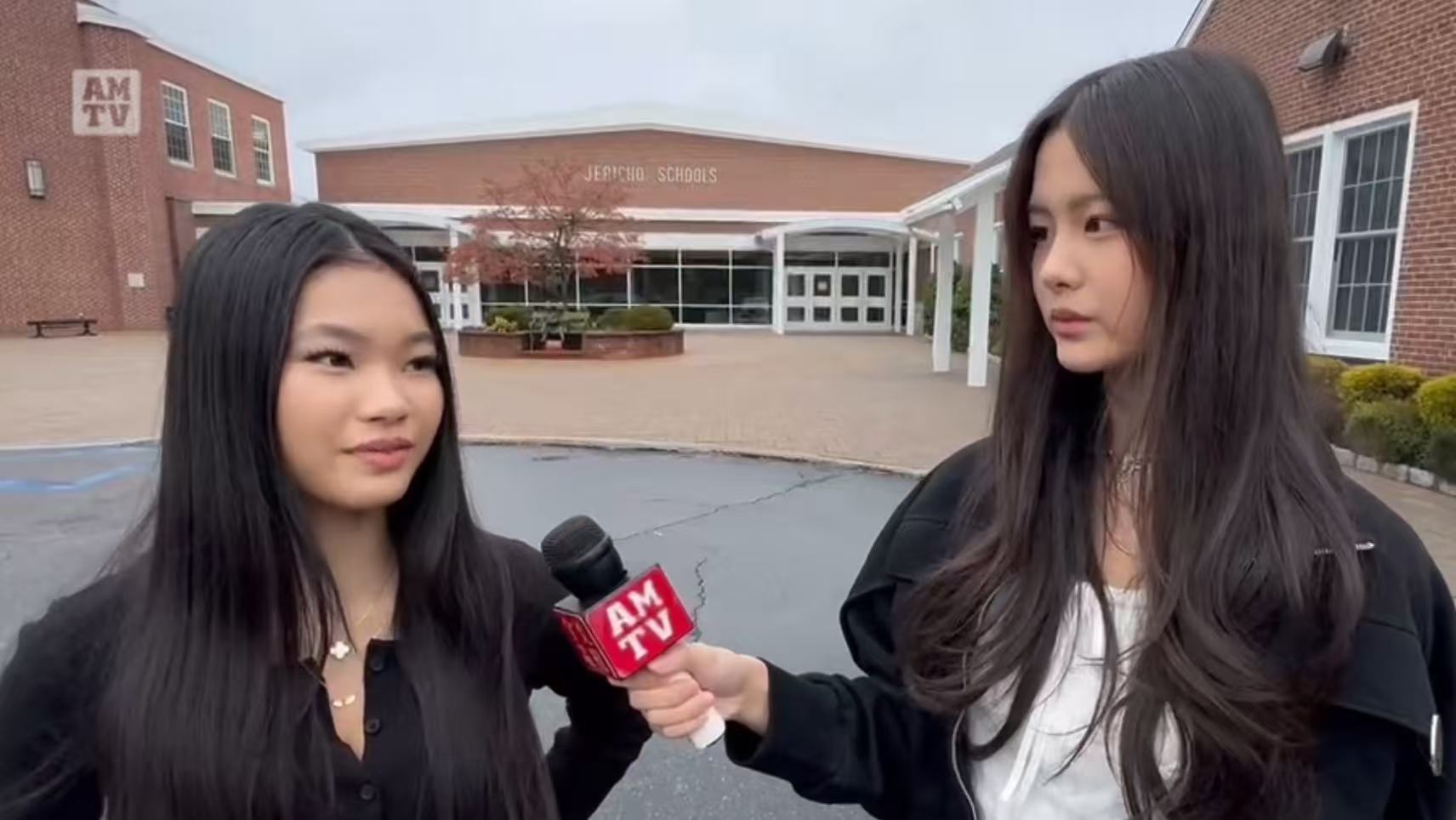
AMTV, NEW YORK, Dec 7 – An open letter from two ninth-graders might seem like a small gesture against a prevalent national crisis, but Lydia Q. Lin and Eirene Hope Liu have chosen to aim their concerns toward the most powerful offices in American politics and technology—and they have done so in the language of both urgency and engineering.
Addressing President Donald J. Trump, First Lady Melania Trump, members of Congress, and tech titans Elon Musk and Jensen Huang, their proposal is as stark as it is specific: to harness artificial intelligence (AI) not just to drive markets or send rockets to Mars, but to keep dangerous weapons from ever crossing school territories. Lydia and Eirene write as youths who support “Making America Great Again” and insist that greatness now depends on the utmost safety of students, with them hopefully not being afraid of heading to school.
Lydia and Eirene situate their appeal at what they call a moral and political crossroads, invoking a campus stabbing of conservative speaker Charlie Kirk and two decades of school shootings as the backdrop to their fears. They pose a question that cuts through ideological divides: if the United States leads the world in AI, robotics, and advanced engineering, why can it not prevent weapons from entering schools in the first place?
In that tension between high-tech prowess and basic security, Lydia and Eirene carve out a distinct role for themselves: not as victims-in-waiting or passive students, but as visionaries in hoodies and backpacks. Lydia, who serves as Director of the YLDO Youth Business Council, brings a budding strategist’s mindset to the problem. Eirene, Director of the YLDO Youth Art & Fashion Council, approaches the same crisis with a creative lens, envisioning how design, communication, and symbolism can help shift entrenched institutions toward change.
Their vision is unabashedly ambitious. They call on the White House to link “Make America Great Again” with “Make America Safe Again,” arguing that a superpower unable to safeguard its children has forfeited any claim to moral leadership. At the same time, they are shrewd about power: they address Melania Trump as a potential champion for youth, invite Barron Trump as a peer to join their “Make America Safer” initiative, and place their letter firmly in the public square as “an open letter to the people of the United States,” not just a private appeal.
At the core of Lydia and Eirene’s proposal is a detailed vision for an AI-driven school safety system that inverts the current logic of campus security, shifting from a reactive to a preventive approach. They outline a four-part framework: federal funding to modernize school security infrastructure, deployment of AI-powered scanning systems capable of detecting concealed weapons before entry, proactive threat-detection mechanisms such as robotic patrol units, and a commitment to equitable access, ensuring that both rural and urban schools receive protection. This is not a vague plea to “use technology better,” but a blueprint that borrows the language of legislation and systems design.
In recent years, leading technologists, including Musk, have signed open letters warning about unregulated AI development and calling for “shared safety protocols” and stronger governance. By contrast, Lydia and Eirene press for a different kind of AI safety: systems engineered to prevent physical harm in the hallways where they and their classmates walk every day. They are not dismissing long-term concerns about AI; rather, they are insisting that America’s first duty is to prevent the next stabbing or shooting, not simply to debate speculative future catastrophes.
This focus on AI as a guardian, not just a disruptor, also reflects the philosophical bent of the World Harmony Foundation, the New York–based nonprofit ecosystem in which Eirene has emerged as a young creative figure. The foundation has long operated at the intersection of youth leadership, environmental stewardship, and diplomacy, positioning itself as a bridge between international institutions and emerging generations.
Within this framework, the teens’ unusual addressees come into focus. Musk and Huang are not only avatars of AI innovation, but also embodiments of the “giants” who, in Lydia and Eirene’s eyes, have the resources and influence to accelerate a “nationwide revolution in safety technology.” Their appeal to these leaders is as much moral as technical: if industry can build autonomous vehicles and foundational AI models, surely it can help engineer campus scanning systems and predictive patrols that make “thoughts and prayers” obsolete as a national response to tragedy.
If Lydia’s voice leans toward policy and systems, Eirene’s story emerges from a different but complementary trajectory: art as diplomacy and youth as moral witness. As a young Harmony Ambassador within the World Harmony Foundation network, she has already navigated spaces many adults never enter, from youth painting exhibitions connected to United Nations events to ceremonial artistic gifts for global leaders. In these settings, she has learned how visual symbolism can move people where spreadsheets and speeches cannot, a lesson that surfaces in her insistence that America’s security crisis is also an emotional and cultural wound.
The World Harmony Foundation itself has spent years championing harmony between humans and the natural world, elevating youth voices on climate and peace from UN conference halls to national media. Its model often pairs youth-led creative expression with concrete policy ideas, aiming to shift environmentalism and peace-building from lofty rhetoric to pragmatic action. When young representatives of the foundation have taken the stage in international forums, they have pressed older diplomats to let youth help write the “blueprints” for the future, whether in climate policy or waste reduction. Lydia and Eirene’s letter can be read as a domestic echo of that same stance: an insistence that young people have both the right and the responsibility to help design the systems that will govern their safety.
This blending of artistry and policy has defined Eirene’s emerging profile. Her creative work for the foundation has not been limited to canvases; it has extended to public storytelling that seeks to “arrange hearts of gratitude” and illuminate what the organization calls a harmonious youth. Through these efforts, she has developed a sense of how aesthetics and narrative can frame urgent problems in ways that invite shared responsibility rather than despair. In the context of school safety, that means describing AI not as an alien force to be feared, but as a tool that, properly governed, can help fulfill the fundamental promise that a school should be a sanctuary, not a battlefield.
Lydia’s path through youth business and leadership circles has exposed her to another side of the World Harmony ecosystem: the need to translate moral aspirations into budgets, statutes, and institutional commitments. In her call for a “Protect School & Community Safer Act,” she echoes the foundation’s habit of pairing big ideals with operational detail. The act, as she conceives it, is about more than hardware; it is about enshrining equity in safety, ensuring that high-tech defenses do not become yet another privilege reserved for affluent districts while rural or underfunded schools remain exposed.
Together, Lydia and Eirene embody a quiet but consequential shift within their generation: they do not wait for adults to invite them into the room; they knock on the heaviest doors they can find. Their open letter’s addressees are a map of the institutions they believe must be linked if the country is to move beyond reaction toward prevention.
Ultimately, the story of Lydia Q. Lin and Eirene Hope Liu is not merely about two teenagers entering the realm of national security policy. It is also about the kind of civic imagination that organizations like the World Harmony Foundation have sought to cultivate: one that sees no contradiction between painting a vision of planetary regeneration at the United Nations and demanding an AI-enabled shield around an American middle school. For the foundation, the stakes are continuous: a society that cannot protect its children at home will struggle to honor its commitments to peace and sustainability abroad.
From the foundation’s vantage point, Lydia and Eirene’s open letter offers a glimpse of how Generation Z might redefine leadership in the age of artificial intelligence. They use the tools available to them—language, symbolism, and the moral authority of youth—to press those with power to treat safety not as a partisan trophy but as a universal baseline. And they do so with a conviction that the technologies transforming economies must also transform the lived experience of walking into a classroom.
As the World Harmony Foundation has often argued in its work on environment and peace, true harmony is not passive; it is a deliberate alignment of innovation with compassion. In elevating Lydia and Eirene’s call for AI-powered campus security, the foundation extends that principle to America’s most intimate public spaces, suggesting a simple but demanding standard for this technological moment: before humanity reaches for distant planets or ever more powerful algorithms, it must prove that it can safeguard the children who step through school doors each morning, trusting the adults who built the world around them.