


House Select Committee on China released a new report titled Stop China’s Theft of America’s Taxpayer-Funded Research

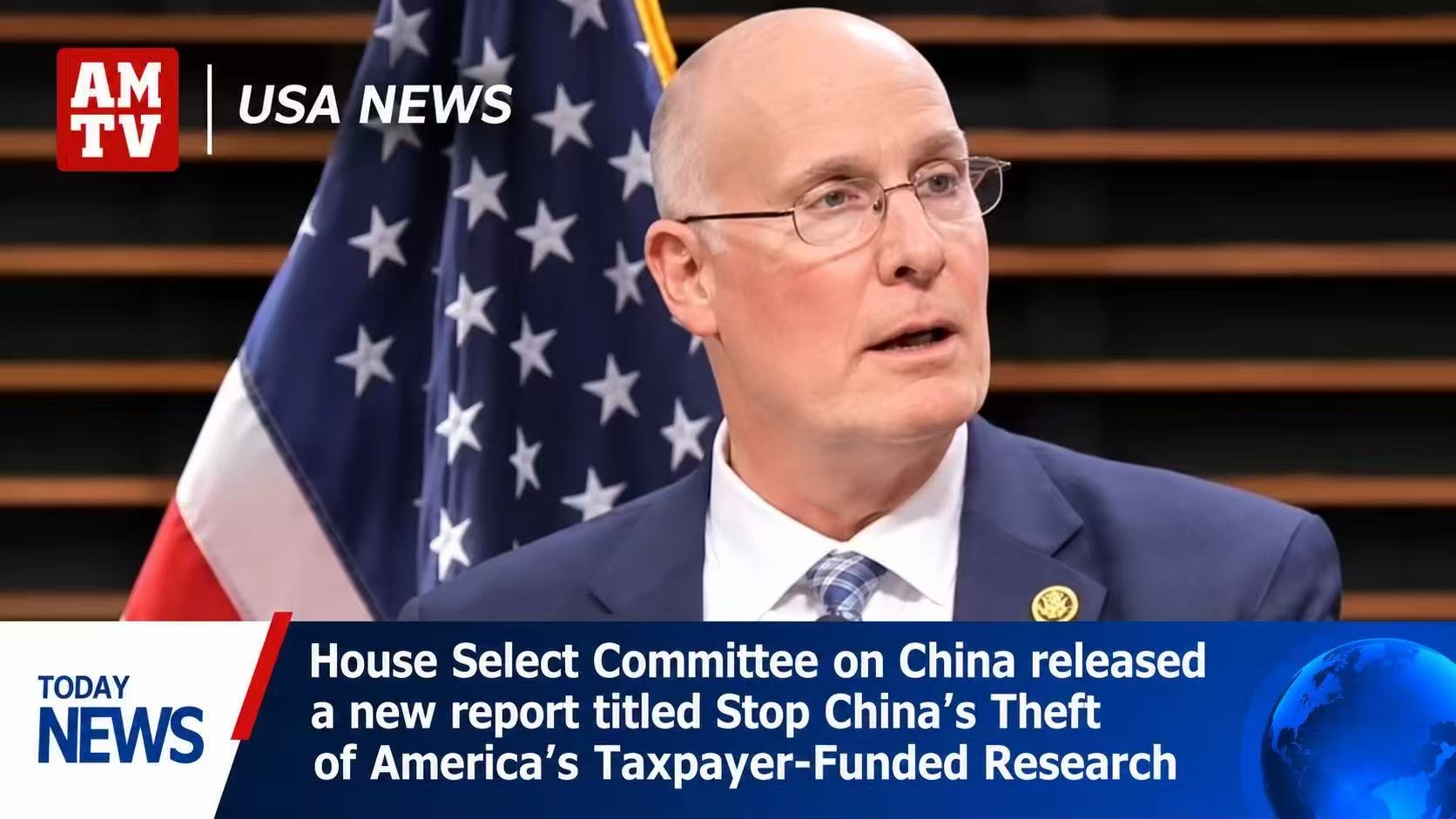
Washington D.C., Oct 13 – Today, Chairman John Moolenaar (R-MI) of the House Select Committee on China released a new report titled Stop China’s Theft of America’s Taxpayer-Funded Research. The report rebuts arguments against commonsense research security guardrails, such as the Securing Innovation and Research from Adversaries (SIRA) Act, with evidence-based analysis relying on documentation from committee investigations, federal enforcement actions, and inspector general findings. The report’s evidence provides a firsthand look at the foreign affiliations, financial arrangements, and disclosure failures uncovered by federal investigators.
“America’s research enterprise is one of our greatest national assets, and protecting it requires facing the facts, and taking action. Arguments against strengthening research security do not hold up. This report shows why arguments against research security reforms fall short and demonstrate why greater accountability and stronger protections are necessary,” said Moolenaar. “Congress must pass the SIRA Act to establish clear, consistent safeguards across the federal government and ensure American taxpayer dollars are not used to support research collaborations with entities our own government has identified as national security risks.”
The report examines false claims that stronger research security safeguards would undermine academic freedom, restrict scientific innovation, impose excessive administrative burdens, or are unnecessary because universities can adequately police themselves. It also makes policy recommendations to strengthen federal research security, including passage of the SIRA Act, which would establish consistent, government-wide restrictions on federally funded research collaborations involving entities on U.S. government restricted lists.
In addition to calling for passage of the SIRA Act, the report recommends stronger post-award monitoring, consistent government-wide research security standards, incentives for universities that proactively adopt robust safeguards, and greater use of fact-based suspension and debarment authorities when supported by investigative findings.
Committee Releases Hundreds of Pages of NSF Investigative Documents
In conjunction with the report, the Select Committee is releasing more than 700 pages of previously non-public, unclassified investigative records concerning research security cases investigated by the National Science Foundation Office of Inspector General (NSF OIG). These materials include investigative reports, suspension and debarment recommendations, correspondence, foreign employment and talent recruitment program documentation, financial records, and federal grant disclosures.
The records document cases involving undisclosed foreign appointments, compensation from PRC institutions, participation in Chinese talent recruitment programs, conflicts of commitment, and repeated failures to disclose information required by federal research funding agencies. In certain cases, investigators identified foreign relationships and disclosure deficiencies extending across multiple years, research awards, and institutions.
By making these records publicly available, the Committee provides greater transparency into the evidence underlying federal research security investigations and illustrate why some violations cannot be adequately characterized as administrative or paperwork errors. The documents also provide researchers, universities, policymakers, and taxpayers with an opportunity to independently examine the investigative findings informing the Committee’s recommendations.